
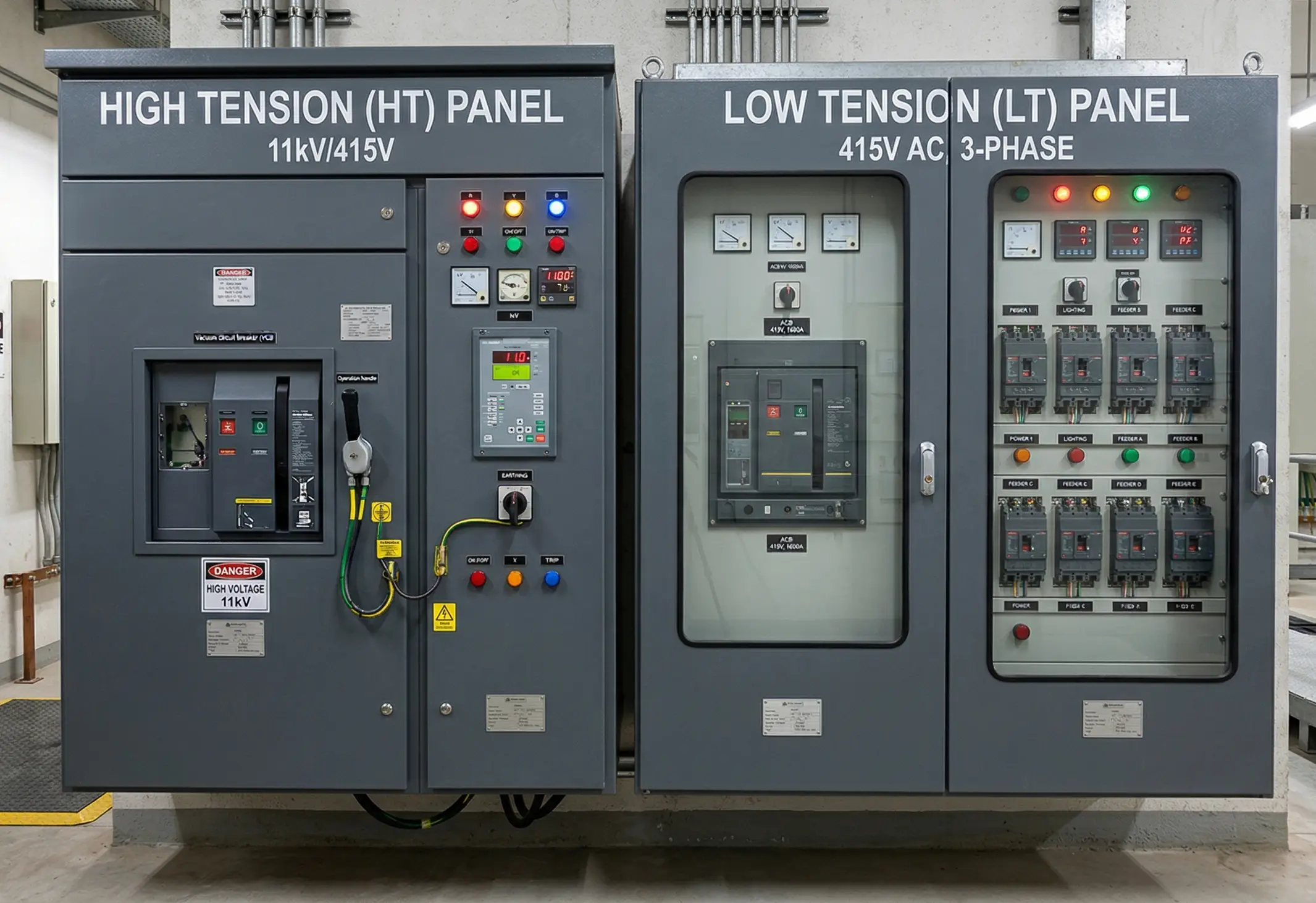
In any electrical distribution system, understanding the difference between LT panels and HT panels is essential for proper planning, safety, and efficiency. Whether you are managing an industrial setup or designing a commercial electrical system, choosing the right panel plays a critical role.
This guide explains everything in a clear, practical, and professional way.
? What is an LT Panel in Electrical Systems?
An LT Panel (Low Tension Panel) is used to distribute electrical power at a lower voltage level, typically below 1 kV. It is the final stage of power delivery where electricity is supplied directly to machines, lighting, and other loads.
? Key Characteristics:
- Works at low voltage levels (up to 1000V)
- Handles distribution to end-use equipment
- Built with protection devices like MCB, MCCB, and ACB
- Ensures safe and controlled power supply
? Where LT Panels Are Commonly Used:
- Residential complexes
- Commercial buildings
- Workshops and small industries
- Office infrastructure
⚙️ Typical Use Cases:
- Power distribution boards
- Motor Control Centers (MCC panels)
- Lighting control systems
⚡ What is an HT Panel?
An HT Panel (High Tension Panel) operates at higher voltage levels, generally above 1 kV, such as 3.3 kV, 6.6 kV, or 11 kV. These panels are responsible for managing incoming power from the utility before it is stepped down.
? Key Characteristics:
- Designed for high-voltage operations
- Controls incoming electricity supply
- Equipped with advanced protection systems like VCB
- Suitable for heavy electrical loads
? Where HT Panels Are Used:
- Large-scale industries
- Manufacturing plants
- Power distribution substations
- Infrastructure and utility projects
⚙️ Typical Use Cases:
- Incoming feeder panels
- Transformer control panels
- High-voltage switching systems
? How Power Flows in a System
To understand the real difference, let’s look at the flow of electricity:
- Power is supplied from the grid at high voltage
- The HT panel receives and controls this power
- A transformer reduces the voltage level
- The LT panel distributes power to end users
? This means:
- HT Panel = Control + Protection (High Voltage)
- LT Panel = Distribution + Usage (Low Voltage)
? LT Panel vs HT Panel (Detailed Comparison)
ParameterLT PanelHT PanelVoltage RangeUp to 1 kVAbove 1 kVRoleFinal distributionPower intake & primary controlSystem PositionAfter transformerBefore transformerDevices UsedMCB, MCCB, ACBVCB, SF6 Circuit BreakersComplexityModerateHighSafety RiskLower compared to HTHigh (requires expert handling)Application AreaHomes, offices, small industriesLarge industries, substations
?️ Choosing Between LT and HT Panels
You don’t actually “choose one” — both are used together in most systems. However, understanding their role helps in:
✅ When You Need an HT Panel:
- When receiving power directly from the utility
- When dealing with high-load industrial operations
- When voltage levels exceed 1 kV
✅ When You Need an LT Panel:
- For distributing power inside buildings
- For running machinery and lighting systems
- For low-voltage applications
? Safety and Maintenance Considerations
- HT panels require trained professionals for operation
- Regular inspection is critical to avoid faults
- LT panels also need maintenance but are easier to handle
- Proper earthing and protection systems are mandatory in both
? Why This Knowledge Matters
Understanding LT and HT panels is important for:
- Electrical contractors and engineers
- Business owners setting up factories
- Facility managers
- Anyone planning industrial infrastructure
It helps in making cost-effective, safe, and scalable decisions.
? Conclusion
LT panels and HT panels are both essential components of an electrical distribution system, but they serve completely different purposes. While HT panels manage high-voltage incoming power, LT panels ensure that power is safely distributed to end-use equipment.
A well-designed system always uses both efficiently to maintain safety, performance, and reliability.